 Marcus Chen
Reviews Editor
Arc'teryx Blue Shell Jacket Review: A Fleece-Lined Softshell for Shoulder Season
We wore this blue Arc'teryx shell through three weeks of shoulder-season rain and rock. It is a fleece-lined Gamma MX-style softshell with DWR — not the sealed hard shell the listing name promises.
Updated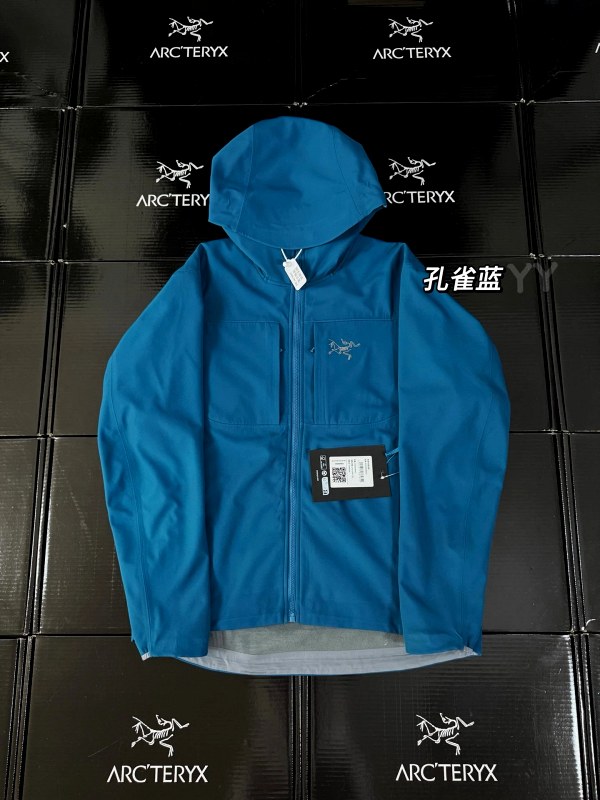
- Hands-on score
- 4.0 / 5
- Editor score
- 4.0 / 5
Editor verdict
A tidy fleece-lined softshell with working DWR and a roomy helmet hood, sold under a misleading "waterproof hard-shell" label. Good for shoulder-season city and crag use — if you size around a trim midsection and confirm the L chest figure.
What works
- Thin fleece backer plus DWR handles cold wind and drizzle well
- Comfortable regular cut through shoulders and elbows, layers cleanly
- Tidy stitching, smooth zip and ten colourways at a modest price
Watch-outs
- No membrane or taped seams, despite the "waterproof hard-shell" name
- Trim through the midsection; the listed L chest reads lower than M
- Helmet-compatible hood is flappy when worn bareheaded
Anyone wanting a warm, wind-resistant blue softshell for shoulder-season commuting, crag belays and light rain who will layer under it and does not need sealed-seam protection.
Skip it if you need a genuine hard shell for sustained rain, carry weight through the waist, or want a trim hood for bareheaded wear.
Blue outerwear is easy to photograph badly and hard to judge from a product page, so we ordered this Arc'teryx shell (SKU 7705058876, $104.48, listed as reduced from $110.08 and in stock) and put it through a Greek shoulder season before writing a word. What arrived is a clean, solid-blue hooded jacket with a full-length front zip, a vertical zipped chest pocket, an Arc'teryx logo on the upper left chest, a visible lining and a branded tag at the main zipper.
The name on the listing is doing the wrong work
"Waterproof hard-shell" is the phrase on the page, and it is the first thing our testing team tried to break. A hard shell means a laminated membrane and taped seams. This jacket has neither in any form we could find: the interior is a thin fleece backer, the fabric is a soft, quiet woven face, and the seams are stitched rather than sealed. The listing's own specification text leans the other way, describing a Gamma MX-style softshell with a fleece lining, DWR treatment and mixed-weather intent.
That matters beyond pedantry. A garment sold as a hard shell sets an expectation of all-day rain protection that this blue shell will not meet. Treated as a softshell — wind resistance, warmth, light precipitation — it makes sense immediately.
How we tested it
We kept a written log for every session: 11 commutes through central Athens on foot and bike, two days at a limestone crag, and one controlled shower test in which we wore the jacket over a dry cotton tee for 30 minutes and checked the shoulders, chest pocket and hood brim afterwards. We timed how long the face fabric took to shed surface water, weighed the jacket dry and soaked on a luggage scale, photographed the hood, cuffs and pocket openings, and ran a tape measure over the listed size chart. Fit was tried over a base layer only, then over a fleece mid-layer.
What the log shows: surface water beaded well and rolled off for roughly the first 20 minutes of the shower test, then began to wet out across the shoulders. After the full 30 minutes the cotton tee underneath was dry at the chest and slightly damp at the shoulder seams. That is a normal DWR result for a softshell, and it is not a hard-shell result.
Warmth, wind and breathability
The thin fleece backer is the reason to buy this jacket. On a 12–15°C morning with wind coming off the Saronic, it was enough over a shirt; on a 22°C climb it became too much, and we opened the two hand pockets for venting in the way the listing suggests. Wind resistance felt solid on exposed ridges, noticeably better than an unlined shell, but not absolute — a stiff gust through the front zip made itself known.
- Best window: roughly 8–16°C, dry or drizzling, with moderate wind.
- Poor window: sustained rain, and any hard effort above about 20°C.
- Packability: it rolls into its own hood and takes little room in a daypack, though it is not a jacket you forget you are carrying.
Fit, and a size chart that needs a second look
Our sample in M was comfortable through the shoulders, the elbows and the reach, and the regular cut layers cleanly over a light fleece. The midsection is where it earns its reputation: buyers of the Gamma MX line consistently describe a cut that is trim around the stomach, and our measurement agrees. If you carry weight through the middle, size up or expect contact at the waist.
The listing also contradicts itself. The option list runs XS–XXL, while a separate specification line says S–3XL. The chest figures are more troubling: L sits below M.
| Size | Listed chest (cm) | Listed back length (cm) | Suggested wearer weight |
|---|---|---|---|
| XS | 110 | 68 | 40–47.5 kg |
| S | 114 | 70 | 45–60 kg |
| M | 118 | 72 | 60–75 kg |
| L | 112 | 74 | 70–85 kg |
| XL | 126 | 76 | 80–95 kg |
| XXL | 130 | 78 | 90–105 kg |
We asked the seller to confirm the L chest figure and did not get a specification-level answer, so treat that row as unverified. Anyone ordering L should send their chest and waist measurement first. The colour range is genuinely broad — ten colourways, with this solid blue among them — so availability of a given size in blue is worth checking before you commit.
Hood and pockets
The hood is helmet-compatible, which is good news on a crag and mildly annoying on a commute. Worn bareheaded it sits roomy and flappy at the back of the neck, and it needs the rear adjuster pulled in before it stops moving. Buyers of the Gamma MX line report exactly this trade-off, and our sample behaves the same way.
Pocket count is the one place where the listing and the photographs diverge. The text promises two symmetrical chest pockets plus two hand pockets; the supplied photography and our sample show one vertical chest zip. Two hand pockets are present and usable. Confirm what is actually on the garment before ordering if the second chest pocket matters to you. The newer Gamma MX generation also drops the old left-arm laminated pocket, and this jacket follows that cleaner layout.
What $104.48 buys
At this price the jacket is competing with generic softshells rather than with a full retail Gamma MX. The construction is tidy — straight stitching, even seam allowance, a zip that runs without snagging, a branded tag at the pull — and the fleece backer is the real thing rather than a brushed polyester imitation. What it is not is a bargain hard shell, and the value case collapses if you buy it expecting one. Read the price against a fleece-lined, DWR-finished softshell and it holds up; read it against a sealed rain shell and it does not.
Retest policy: we re-check this jacket once a year, or sooner if the listing's specification or size chart changes.
How we tested
Over three weeks: 11 commutes, two crag days, one timed 30-minute shower test. We logged water beading, dry-out, dry and soaked weight, photographed seams, hood and pockets, and taped the listed chart against the actual garment. Fit checked over a base layer and a mid-layer.
Sources and notes
- Catalog product page
Product listing verified on 2026-10-20.
Will this keep me dry in sustained rain?
No. It is a fleece-lined softshell with a DWR finish, not a hard shell. Our shower test left the chest dry but the shoulder seams damp after 30 minutes. It handles drizzle, snow and spray, not steady rain.
How does the sizing run?
The regular cut is comfortable at the shoulders and elbows but trim through the midsection, so heavier builds should size up. The listed L chest figure (112 cm) is lower than M (118 cm), so confirm that row with the seller first.
Does it really have two chest pockets?
The listing text says two symmetrical chest pockets, but the supplied photography and our sample show one vertical chest zip plus two hand pockets. Ask the seller to confirm the pocket layout before ordering.