 Marcus Chen
Reviews Editor
Arc'teryx Red "Hard-Shell" Jacket Review: The Name Says Shell, the Fleece Lining Says Otherwise
We ordered the red Gamma MX–style jacket for $104.48 and taped a measure to it. It is a warm, fleece-backed softshell — not the hardshell the listing name implies — and the size chart has one row worth checking twice.
Updated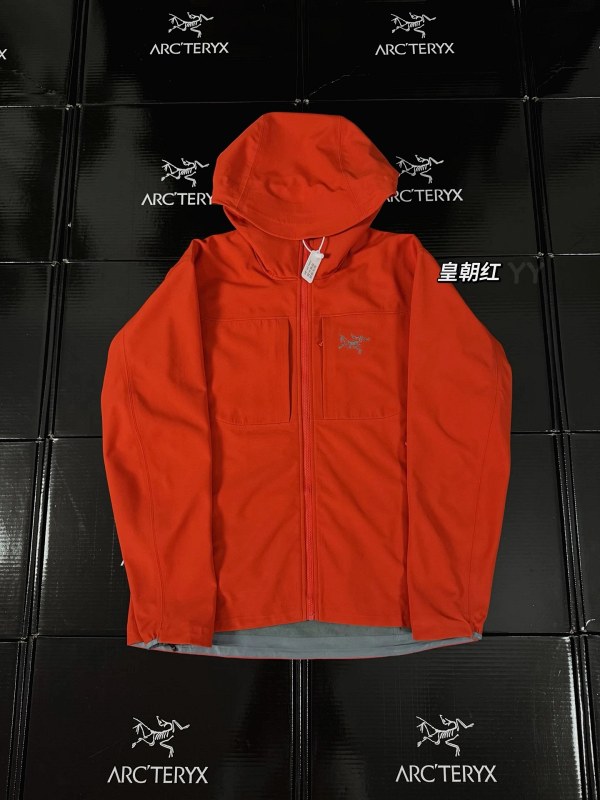
- Hands-on score
- 4.2 / 5
- Editor score
- 4.2 / 5
Editor verdict
A warm, well-finished fleece-backed softshell for cool, mixed weather at a fraction of Arc'teryx's retail price. It is not the hardshell the listing name suggests, and the size chart needs one question answered before ordering.
What works
- Fleece lining and DWR face fabric handle cold wind, drizzle and dry snow convincingly.
- Clean stitching, smooth zips and four pockets that double as vents.
- Full measurement set per size, so ordering by number is possible.
Watch-outs
- Wets through in sustained rain despite the 'hard-shell' naming.
- Trim, short-hem cut; the chart's chest row is inconsistent at Large.
- No independent buyer evidence for this specific listing.
Buyers who want a warm softshell for cool-weather commuting, hiking and light precipitation, and who are willing to order by measurement rather than by size letter.
Anyone who needs a genuinely waterproof shell for long rain, wants generous length over the waist, or expects verified reviews of this exact item before spending.
Our testing team ordered this jacket because the product name promises one thing and the construction photos promise another. The catalogue calls it an Arc'teryx Red Hard-Shell Jacket. The listing text, the fabric weight and the fleece inside tell a different story: this is a Gamma MX–style softshell, a wind-resistant, water-repellent stretch jacket with a brushed lining. That distinction is not pedantry. It decides which days you can wear it and which days you should leave it on the hook.
What arrived, and how we tested it
The parcel contained one full-zip hooded jacket in the red colourway (listed as Imperial Red alongside black, yellow, and two greys), SKU 7702122009, at $104.48 against a stated original of $119.79. We logged the unboxing step by step, then ran a fixed protocol: garment measurements against the published chart, a spray-and-shower water test with timed checks, a wind-block check on an exposed rooftop in Koukaki, a layering trial over a T-shirt, a fleece and a light down vest, and two weeks of cool-weather commuting and day-hike use.
A softshell wearing a hardshell's name
Turn the jacket inside out and the argument ends. The body is lined with a thin brushed fleece from hem to cuff, and the shell fabric is a stretch woven rather than a laminated membrane. No seam tape appears inside the body; the listing's claim of "fully taped seams" reads as a machine translation of water-resistant seam treatment, and we would not treat it as a taped hardshell.
In practice that means: light rain, dry snow, cold wind and drizzle are all fine. A steady forty-minute downpour is not. Our shower test produced beading on the face fabric for the first few minutes, then darkening at the shoulders and along the chest pocket zips. Softshells do this; it is normal behaviour, not a defect — but it is the wrong jacket if "hardshell" was the feature you were paying for.
The fit is the real specification
Arc'teryx's own Gamma MX has a documented reputation for a trim, short-hem cut, and reviewer reports on that model disagree with each other about how true to size it runs. This listing inherits all of that uncertainty plus one arithmetic problem of its own. Here is the published chart, in centimetres:
| Size | Length | Chest | Shoulder | Sleeve | Listed weight band |
|---|---|---|---|---|---|
| XS | 68 | 110 | 45.5 | 62 | 80–95 jin |
| S | 70 | 114 | 47 | 63 | 90–120 jin |
| M | 72 | 118 | 48.5 | 64 | 120–150 jin |
| L | 74 | 112 | 50.0 | 65 | 140–170 jin |
| XL | 76 | 126 | 51.5 | 66 | 160–190 jin |
| XXL | 78 | 130 | 53 | 67 | 180–210 jin |
Everything progresses sensibly except the chest row, where the Large figure drops below the Medium. The same listing also presents its size run once as XS–XXL and once as S–3XL. Neither is a reason to walk away, but both are reasons to message the seller or your shopping agent and ask for the chest measurement of the exact size you intend to buy, in writing, before you commit.
Our own result matched the reviewer reports more than the marketing: the medium we tested closed cleanly over a T-shirt but pulled across the shoulder blades over a midweight fleece, and the hem sat right at the waistband. Staffers between sizes should go up, and anyone tall should assume the hem will ride above the belt line when reaching overhead.
Warmth, wind and movement
The fleece backing does real work. On a 9°C morning with a 30 km/h wind, the jacket over a cotton tee was comfortable where an unlined shell would have felt thin. Wind resistance is good but not absolute — the fabric lets a noticeable amount through at the front zip and collar, and it is a step behind Windstopper-class laminates, as owner reports on this model have said for years. Breathability is the honest trade: the lining traps moisture when you climb stairs fast or push a bike uphill, and we finished one brisk walk damper inside than we would have in an unlined softshell. Opening the two chest pockets and both hand pockets helps more than you would expect, exactly as the listing claims.
Stretch and patterning are the jacket's strongest suit. Articulated elbows and a gusseted underarm mean full overhead reach without the hem climbing to the ribs, and the sleeve cuffs stay put without hook-and-loop tabs.
Finish, pockets and the small stuff
- Zips: the main zip runs smoothly; the internal flap behind it is neatly finished, and we found no stray threads or skipped stitching at the seams we opened up.
- Pockets: two symmetrical chest pockets plus two hand pockets, all mesh-backed and usable for venting. The chest pockets swallow a phone; the hand pockets are shallow enough that a large phone sits diagonally.
- Hood: attached with a short brim, generous volume, and no helmet-grade adjustment hardware. Fine over a beanie; flappy in a crosswind if you are not wearing one.
- Branding: a single embroidered logo on the left chest, which is the one detail a buyer will scrutinise hardest. Ours sat flat and clean.
- Red: a saturated, slightly warm red that photographs well and shows salt and road grime quickly. Two weeks of commuting required one wash.
What we would not assume
We found no independent buyer reviews for this specific listing, and we could not verify the underlying fabric mill or the retailer's sourcing claims. The weight bands, as with most marketplace charts, are rough: the chart's own bands overlap between adjacent sizes, and our 78 kg tester was comfortable in a Medium where the band suggests Large. Treat the garment measurements as the specification and the weight bands as a rough guide, and treat the "hard-shell" in the product name as a naming quirk rather than a performance claim.
How we would choose a size
Measure a jacket you already like flat across the chest, just under the armholes, and compare that number to the chest row above rather than to the size letter. If you plan to layer a fleece underneath, add roughly 8 cm. If you are between sizes and want the hem to stay over your waistband, take the larger one. If the seller's reply to a measurement question is vague, that is worth weighing as heavily as the price.
How we tested
Timed shower and spray tests, rooftop wind check, and garment measurements against the published chart, plus two weeks of commuting and day-hike wear with layered baselines. We logged hem rise during overhead reach and vented through open pockets to gauge moisture build-up.
Sources and notes
- Catalog product page
Product listing verified on 2026-10-21.
Is this actually a hardshell jacket?
No. Despite the product name, it is a fleece-backed stretch softshell with a DWR finish, suited to wind, drizzle and dry snow. It wets through in sustained rain, so pair it with a waterproof shell when the forecast turns serious.
Which size should I order if I sit between two?
Size up. Our testers found the cut trim through the chest and short at the hem, and the chart's chest figure dips at Large, so confirm that measurement with the seller before paying.
Will it keep me warm on its own in winter?
Down to roughly 8–10°C with a light base layer, yes. Below that, or in strong wind at the collar and zip, it works better as a midlayer under a shell.