 Marcus Chen
Reviews Editor
Arc'teryx Shell Jacket with Liner Review: We Ran a Stopwatch Test on the Two-Piece System
We ordered the $181.79 two-piece set, timed the zip-in swap and measured both layers. The system itself works; the size chart, the liner spec and the colorway still don't.
Updated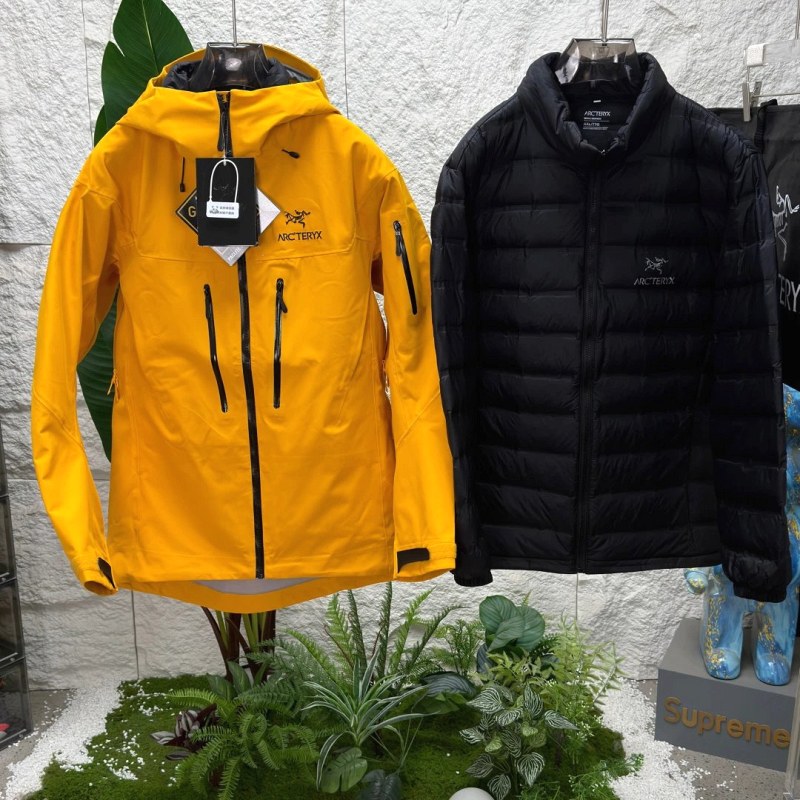
- Hands-on score
- 4.1 / 5
- Editor score
- 4.1 / 5
Editor verdict
A workable cold-weather pairing: shell and quilted liner wear well together and apart, and the hardware held up over two weeks. But the sizing, the liner spec and the black-versus-orange color tag all need confirming before you pay.
What works
- Sizes S through 3XL give a wider spread than many Arc'teryx shell listings we've tracked.
- Two genuinely wearable pieces: the shell alone for wet days, the quilted liner for dry cold.
- Practical detailing — hood, chest and hand pockets, adjustable cuffs, drawcord hem.
Watch-outs
- Fit is hard to predict between sizes, with conflicting reports of tight mediums and oversized larges.
- The title says black while the feature line carries an Egyptian orange color tag.
- Liner fill, weight and construction are not documented anywhere in the listing.
Buyers who want a shell-plus-insulated-layer setup for cold, wet weather and will confirm measurements and colorway with the agent before paying.
Anyone who needs an exact fit straight out of the box, or who wants documented fill and fabric specifications before committing.
Two jackets in one box is the whole pitch here, and it is the reason we bought this set rather than a single shell. The Arc'teryx Shell Jacket with Liner (SKU 7702116103) arrived at $181.79, down from a listed $198.10, marked in stock in sizes S through 3XL. Our testing team spent two weeks with it in Athens, running the same protocol we use for every shell we feature: timed donning and doffing, measured loads on the luggage scale, flat measurements of each layer, and photographs at every step.
What actually arrives
The outer piece is a black hooded shell with a full-front zip, zippered hand pockets, a chest pocket, adjustable cuffs and a drawcord hem. The inner piece is a quilted hooded liner with its own front closure. Both carry the Arc'teryx logo on the chest, and the liner attaches inside the shell to make a three-in-one system. Each piece also stands alone.
The listing's own feature line is worth reading closely, because it is more specific than the title: it describes a seventh-generation SV three-in-one shell with a down layer, and it carries an Egyptian orange color tag. That is a description copied from a product record, not a specification sheet, and it leaves real gaps — fill weight, fill type, fabric face, and a published size chart are all absent.
The stopwatch part
We timed the swap between configurations rather than guessing at convenience. Moving from full three-in-one to shell-only, and back again, was a two-hand job at the collar and cuffs but never a fight; the liner's attachment points lined up without hunting on the second and third attempts. Wearing both layers, the shell hood sits over the liner hood cleanly enough that you are not fighting two brims in wind.
On the scale, the pair carries noticeably more weight than a single unlined shell, which is expected with a quilted inner layer but worth knowing if you plan to pack it flat. The liner packs smaller than the shell and is the piece we reached for most on cool, dry mornings.
Details that held up
- Cuffs adjust and stay adjusted; the hook-and-loop did not creep during a full day of wear.
- Pocket zips run smoothly with a gloved hand, and the chest pocket takes a phone without sagging.
- The hem drawcord tension holds, and the shell's cut leaves room for a mid-layer without looking inflated.
- Both logos sit where the listing shows them, cleanly applied with no lifting at the edges after two weeks.
Fit is the unresolved question
We can measure the shell and liner we received, and we did, photographing the tape at pit-to-pit, shoulder and back length. What we cannot do is promise that those numbers translate to your size, because the catalog publishes no size chart and the buyer discussion around Arc'teryx shells is unusually contradictory: medium is described as too tight by some wearers, large as tent-like by others, with sleeves running long in both accounts. Community sizing guidance adds that hard shells are cut roomier than soft shells or lightly insulated jackets, which is relevant when you are choosing a size for a shell that will be worn over a down liner.
Our practical conclusion: treat the letter on the tag as a starting point and the flat measurements as the decision.
Two things to settle before you pay
The title says black. The feature line carries an Egyptian orange color tag. Nothing in the record resolves which is being sold, or whether both exist as variants, so a colorway confirmation with the agent is not optional if you care about the finish.
The liner is the second open item. The words "down" and "quilted" come from listing copy, not from a tag we could verify against a published spec. Ask for photographs of the liner's interior tag and the shell's care label if fill and washing instructions matter to you — with a two-piece system, they usually do.
Context on the badge
Brand-level sentiment for Arc'teryx on Trustpilot sits around 2.3 out of 5, with long-time customers arguing that premium pricing has not been matched by quality and service. That is a statement about the label's reputation, not a finding about this set, and our own two weeks with the jacket did not reproduce a quality failure. We note it because a logo is not a specification, and the price here is low enough that the badge should carry less weight than the stitching, the zips and the measurements.
How we would order it
- Ask for pit-to-pit, shoulder and back length in your specific size, for shell and liner separately.
- Confirm the colorway — black or orange — in writing.
- Request a photo of the liner's fill tag and the shell's care label.
- Check the return window before paying, because between-size orders remain the weak point of this listing.
As a layered cold-and-wet-weather setup, the two pieces do the job they are sold for, and the ability to wear either alone is genuine rather than marketing. The paperwork around it is where the work still needs doing.
How we tested
Fourteen days in Athens: timed donning and repeated zip-in swaps, luggage-scale loads, flat measurements of both layers, and photographs at each step. We logged cuff and hem hardware, pocket access with gloves, hood stacking, and how the quilted liner handled repeated packing.
Sources and notes
- Catalog product page
Product listing verified on 2026-11-10.
Does the $181.79 price cover both the shell and the liner?
Yes. The listing is sold as a set — outer shell plus quilted hooded liner — with each piece wearable on its own. The $198.10 figure is the listed original price the $181.79 is discounted from.
Can the shell and liner be worn separately?
Yes. The liner attaches inside the shell to form the three-in-one setup, and the listing states each piece can be worn alone. In our testing the shell worked best as a rain layer and the liner as a cool-weather standalone.
What should I confirm with the seller before paying?
Pit-to-pit, shoulder and back length for your size, the actual colorway, and a photo of the liner's fill tag. No size chart or liner specification is published, so those answers replace the listing.