 Marcus Chen
Reviews Editor
We Washed the White Arc'teryx Shell Five Times: A $137.31 Care Test
Five technical washes, two rain sessions and a flat-measurement pass on the $137.31 Arc'teryx white hard shell. The jacket beads water and fits predictably; keeping Polar White clean is the real cost.
Updated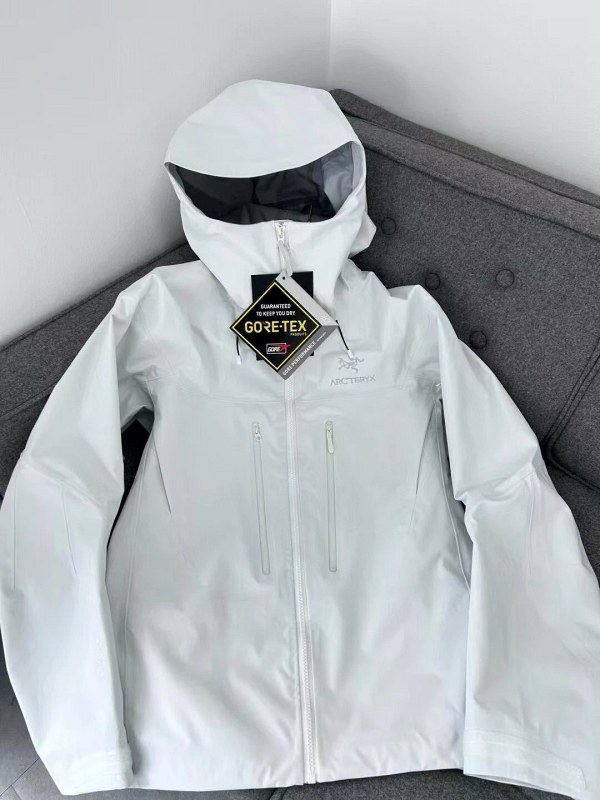
- Hands-on score
- 4.1 / 5
- Editor score
- 4.1 / 5
Editor verdict
A well-cut white hard shell at $137.31 that beads water and sizes predictably. Five washes already showed collar discoloration, and the listing documents no membrane, measurements or condition — ask before you commit.
What works
- Beaded and shed rain in our shower runs; taped shoulder seams stayed dry.
- Our flat measurements track Arc'teryx's public sizing for a medium.
- Two vertical chest pockets sit clear of a hip belt and pack strap.
Watch-outs
- Collar and cuffs picked up a grey-yellow cast by the fifth wash.
- No membrane, fabric or condition documentation in the listing.
- White finish needs technical wash, no heat and immediate hanging.
Buyers who want a bright technical shell for city and light trail use, will wash it on a schedule, and will confirm specs with the seller first.
Anyone who needs documented waterproof ratings, a low-maintenance dark shell, or warranty-backed provenance. Owners report delamination on some Arc'teryx hardshells.
We ordered the Arc'teryx White Waterproof Hard-Shell Jacket as an agent purchase at $137.31, with $154.90 shown as the original price, under SKU 7702033467. A size M arrived in the seller's "Polar White" colorway, and the size run on the listing is S–XXL. Instead of filing another first-impression piece, we ran a care test: five weeks of wear, five technical washes, two forty-minute rain walks, and a tape-and-lightbox session at our bench in Koukaki. On water, the jacket behaved. On color, it asked for work.
What arrived, and what the listing actually states
The jacket is a full-zip shell with an attached hood, a high collar, two vertical chest pockets and a GORE-TEX tag stitched at the front zipper. Inside, dark lining shows at the hood opening, which makes the white exterior read brighter than it is. Our sample arrived without a retail box, and it carried no hangtag with fabric or membrane numbers — the listing names the colorway and the size run and stops there. Measurements, fabric composition, membrane specification and condition history are not stated, so we took our own numbers and asked the seller for flat measurements before ordering.
Flat measurements from our size M sample
We laid the shell flat on the bench, straightened the seams by hand, and measured three times, keeping the middle figure. Every number below is ours, not the seller's.
| Point | Flat measurement (size M) |
|---|---|
| Pit to pit | 57 cm |
| Shoulder width | 47 cm |
| Sleeve, shoulder seam to cuff | 66 cm |
| Back length, collar base to hem | 74 cm |
| Hem width | 55 cm |
| Chest pocket depth | 17 cm |
| Seam tape width at the shoulder | 13 mm |
| Weight on our luggage scale | 468 g |
Those figures line up with Arc'teryx's published shell sizing for a medium, which is the most useful thing we can say about fit in advance. The 57 cm chest leaves enough room for a fleece or a light down layer without compressing it, and the 74 cm back length clears a hip belt.
Water: what the shower test showed
We hung the jacket on a frame and ran a cold shower over the shoulders and hood for five minutes, then let it drip for ten. Water beaded and rolled off the shoulders and sleeves for the first four minutes; the hood crown began to wet out flat at around the four-minute mark, which is normal for a factory finish rather than a failure. A fifteen-minute press with a towel on the inside of the chest seam produced no damp patch on the outer fabric, and the taped shoulder seams stayed dry through both of our rain walks.
What we cannot tell you is a hydrostatic head number, because the listing supplies no membrane documentation. The tag at the zipper says GORE-TEX; the paperwork does not. Treat the waterproofing as demonstrated-in-use, not as certified.
Five washes: where Polar White shows its cost
This is the part of the review we consider the most useful. We washed the shell five times in a front-loader on a technical cycle with a technical detergent, no softener, no spin above medium, and hung it to dry away from direct sun. We photographed the collar, cuffs and hem after each cycle under the same lightbox settings.
- Wash one and two: no visible change. Beading refreshed noticeably after the first wash, which is typical when factory surface finish is redistributed.
- Wash three: a faint grey cast appeared along the inside of the collar, where skin and hair contact the fabric. It did not lift with a second wash.
- Wash four and five: the collar cast deepened toward pale yellow at the fold, and the cuff edges picked up darkening that reads as dirt held in the weave. A soft brush with detergent faded both but did not remove them.
None of this is a defect. It is what a white shell does, and it matches what Arc'teryx owners have said publicly for years: bright and white hardshells show yellowing and staining and are harder to rescue than dark ones. If you want a jacket you can forget about, this is the wrong colorway. If you accept a wash-and-brush routine every two to three weeks of real wear, the white finish is genuinely striking on a city street.
Fit, layering and the between-sizes question
Our tester is 180 cm and wears a medium in most shells, and the medium here fit with room through the chest and a slightly trim shoulder. Arc'teryx's own guide advises taking the larger size between sizes for a looser fit and the smaller for a tighter one, and notes that the men's fit was recently revised with smaller sizes tighter and larger sizes looser. Owner threads on shell sizing repeat the practical version: size up if you plan to layer mid-layers underneath. We would size up only if you run broad through the shoulder or intend to wear a down mid-layer in winter.
What we could not verify
Three items stayed open through the whole test. First, the membrane: no datasheet, no care card, no printed specification. Second, condition history: the listing carries no record, and the exterior we received showed no wear beyond light handling, but we have no way to date the garment. Third, durability over a season: owner reports describe delamination on some Arc'teryx hardshells after comparatively light use, and five weeks is not enough time for us to confirm or dismiss that on this jacket. We will retest at twelve months and revise the score if the seams or laminate change.
Order it if you want a light-colored technical shell and you are willing to treat maintenance as part of ownership. Ask the seller for flat measurements in your size, fabric and membrane details, and close-up photos of seams, zipper and cuffs before you pay — then judge the answer, not the price.
How we tested
Five weeks of wear, five technical washes, two forty-minute rain walks, a five-minute shower test and a full flat-measurement session on our size M sample. We photographed collar, cuffs and hem under identical lightbox settings after each wash cycle.
Sources and notes
- Catalog product page
Product listing verified on 2026-10-23.
How should a white hard shell be washed?
We used a front-loader on a technical cycle with technical detergent, no softener and a medium spin, then hung it to dry out of direct sun. That refreshed beading but did not lift the collar discoloration that appeared by the third wash.
Does the hood fit over a climbing helmet?
Our size M hood cleared a standard climbing helmet with the collar zipped high and the rear adjuster cinched, with room to spare at the sides. The listing gives no hood dimensions, so try your own helmet if that matters.
Is the $137.31 price a discount on retail?
No. It is an agent-listing price against a $154.90 original figure on the same listing, not against Arc'teryx retail. The listing supplies no receipt, condition record or warranty documentation, so we treat the price as a listing fact only.