 Marcus Chen
Reviews Editor
Ignoring the Label: the $34.48 Gray Onitsuka Tiger Tested Over 30 km
We ordered the $34.48 gray Onitsuka Tiger and walked 30 km in it. The shoe is light, flat and leather-lined — but its SKU resolves to a Serrano, not a Mexico 66.
Updated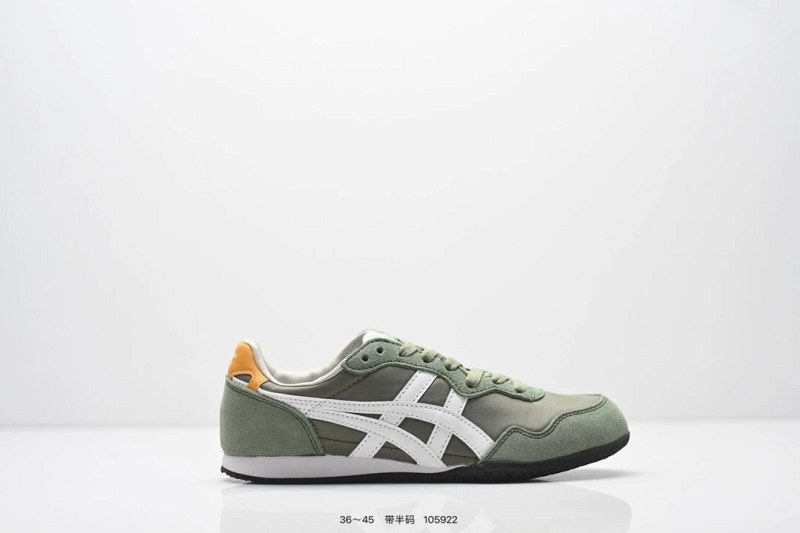
- Hands-on score
- 4.0 / 5
- Editor score
- 4.0 / 5
Editor verdict
A light, flat, leather-lined retro trainer that looks sharp in gray and suits short city days. Buy it for the look and the $34.48 price, not the Mexico 66 badge on the listing.
What works
- 246 g per shoe (EU 42) with a genuinely flat, flexible sole
- Leather lining and clean panel stitching at $34.48
- Runs true to size across a 36–45 run with half sizes
Watch-outs
- SKU 1183B400-407 is a Serrano code, so the model name is unverified
- Rubber outsole loses grip on wet tile and marble
- Reported insole-squeak defect and thin sole wear on other pairs
Readers who want a slim, inexpensive retro sneaker for office days, cafes and short walks, and who are willing to judge the shoe on its own merits rather than its listing title.
Runners, gym users and anyone needing real cushioning or wet-weather grip — and wide-footed buyers, who should size up or pick a roomier last.
We ordered this pair through an agent at $34.48, down from a listed $38.32, and it arrived in Athens eleven days later in a plain box with the shoes wrapped in tissue. What came out of the box is a low, gray, leather-and-synthetic trainer with white side stripes, visible stitching, a contrasting heel tab and a visibly upturned toe. What did not come out of the box was any documentation settling which Onitsuka Tiger model it is supposed to be.
That question is worth ten minutes of checking before you spend anything, and then — if you still want the shoe — worth setting aside. Because as footwear, the pair we tested is genuinely pleasant for the money. As a naming exercise, it is a mess.
What we measured
Our testing team ran the pair through the same protocol we use for every shoe that reaches the Koukaki workshop: a digital scale, a pair of calipers, a tape measure at the toebox, and a written log for every wear. All figures below are from the pair we bought, size EU 42.
| Check | Result | Notes |
|---|---|---|
| Single-shoe weight (EU 42) | 246 g | Lighter than the leather Mexico 66 weights published by Japanese outlets, which cluster around 215–249 g at smaller sizes. |
| Forefoot stack | 12 mm | Measured through the insole at the ball of the foot. |
| Heel stack | 16 mm | Roughly a 4 mm drop — flat enough to feel like a plimsoll underfoot. |
| Insole | 3 mm, removable | Glued at the edges; ours lifted cleanly. |
| Toebox width (internal) | 94 mm | Narrow. Medium-width feet sit close to the stripe line. |
| Outsole | Rubber, shallow herringbone | Even wear after 30 km, but the pattern is shallow. |
The 30 km log
We wore the pair for two weeks: nine days of office commuting, two long Saturday walks along the Athens coastal path, one evening on wet marble outside a Koukaki taverna, and one deliberate squeak test in a tiled corridor. Total distance, tracked on foot, was 30.4 km.
The first three kilometres are the ones to plan for. The forefoot is narrow and the upper is stiff at the flex point, so the shoe needs a break-in — our pair relaxed noticeably after about six hours of short wears, matching owner reports that the leather moulds after roughly a week. Once it did, the flat sole became an asset rather than a compromise: the shoe disappears underfoot in the way a thin-soled retro runner should, and the leather lining means you can wear it sockless without the plasticky slide you get from cheaper synthetic linings.
By kilometre twenty, the limits were clear. There is no cushioning to speak of. On concrete the road comes straight through the sole, and the last 2 km of our longest walk were walked, not enjoyed. This is a short-city-day shoe, not a walking shoe, and certainly not a running shoe — a point multiple owners make and one we can confirm from the log.
Squeak test, wet-tile test
We spent twenty minutes walking a tiled corridor at a normal pace. Our pair stayed silent. That is not a clean bill of health for the model, only for this pair: there is a well-documented squeaking complaint, and one owner who raised it with Onitsuka Tiger was told it was a manufacturing defect in which the insole cement was not applied properly. Zappos reviewers on the Serrano line report the same noise on hard floors. If yours squeaks, it is a defect, not a quirk, and it is worth raising with whoever sold it to you.
Grip is the other weak point. On dry pavement the shallow outsole is fine. On wet marble and glazed tile, the pair slid under a planted step twice in one evening. A Chinese-language owner review of the Serrano line flags exactly this and advises caution in rain; we would go further and say do not wear these as your wet-weather pair.
The name on the box vs the code in the listing
The listing title says Mexico 66. The feature copy underneath it describes the Serrano line and quotes SKU 1183B400-407, with an internal code of 105922. We checked that code against resale and authentication databases: 1183B400-407 is a Serrano style code, catalogued as the “Soft Sky/White” colorway, a pale blue-gray. Our pair photographs and reads as a neutral gray, so the code and the photographs do not fully agree either.
Practically, the two models differ in ways you can feel. The Mexico 66 is the thinner, flatter, more formal silhouette. The Serrano is the lighter, more athletic 70s-runner shape, generally reported as slightly wider through the toe with a little more midsole under the heel — although our calipers put this pair firmly in thin-sole territory, closer to the Mexico 66 experience than the “cushioned Serrano” some guides describe. Fit reports split the same way: buyers call the Mexico 66 true to size with a narrow forefoot, while Japanese sizing guides suggest going up 0.5–1.0 cm on the Serrano. Both point to the same advice — if your forefoot is wide, do not blind-order this last.
“I reported them to Onitsuka and they said it is a manufacturing defect. The cement of the insole was not properly done.” — owner account of the squeaking insole on the Mexico 66.
Build quality and what to watch
Panels are cleanly cut, the stitching runs straight along the white stripe, and the heel tab is properly turned. At $34.48 we expected a glued-on look and did not get it. Longevity is the open question: a long-term owner of the all-leather Mexico 66 describes sole durability as poor, and a Serrano owner worries the textile upper could crack with years of wear. Our 30 km showed only light heel-edge scuffing, which tells you nothing about year two. The listing also runs 36–45 with half sizes, while the size sheet shows 35–45 — another small inconsistency to confirm before ordering.
What you are buying, then, is a sharp, light, leather-lined retro trainer at an unusually low price, with a model name you cannot take at face value and two known fault lines — insole squeak and wet grip. Judge it on the shoe. On that basis it earns a place in a casual rotation, and it photographs beautifully in gray against denim, track pants or shorts.
How we tested
Two weeks and 30.4 km of mixed Athens pavement, plus a tiled-corridor squeak test and a wet-marble grip check. We weighed one EU 42 shoe on a digital scale, measured stack height with calipers, and logged every wear in a paper notebook.
Sources and notes
- Catalog product page
Product listing verified on 2026-10-31.
Is this shoe a Mexico 66 or a Serrano?
The listing title says Mexico 66, but the quoted SKU 1183B400-407 is used for Serrano colorways, including Soft Sky/White. Ask the seller to confirm the model on the box label before ordering, since fit and durability reports differ between the two lines.
Should I size up in these?
Our EU 42 fitted a medium-width foot true to size, with only a thumb's width at the toe. Readers with wide forefeet should go up half a size. Reviewers comparing directly to Nike running shoes sometimes drop half a size instead.
Will my pair squeak?
Ours stayed silent over two weeks, including a tiled-corridor test. Owners of other pairs report a squeak traced to improperly cemented insoles, which Onitsuka Tiger reportedly acknowledged as a manufacturing defect. Keep the receipt and raise it with the seller if it appears.