 Elena Papadakis
Editor-in-Chief
Dark Over-Ear Headphones: Color and Display Pairing Guide
Dark over-ear headphones look best in images with muted, textured backgrounds. In the photo, the headphones feature dark oval ear cups as the visual center, paired with a metal extension arm, mesh headband, and gray fabric details, giving a restrained, layered look. When styling, focus on dark, gray, and warm accents to highlight the silhouette and surface reflections. ## First, establish the main colors The safest base palette is black, charcoal, and cool gray. Place dark ear cups against a bla
Updated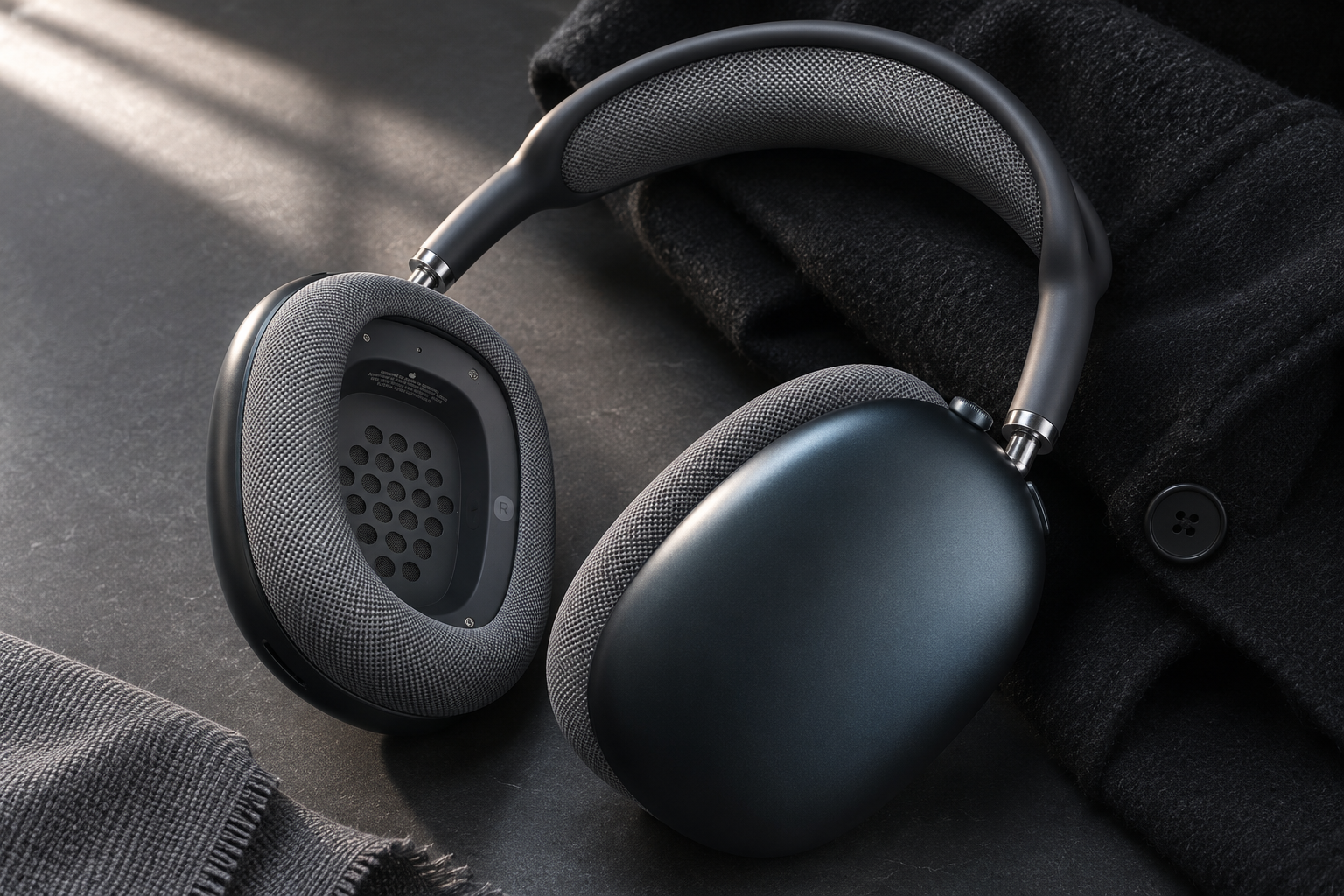
Dark over-ear headphones look best in images with muted, textured backgrounds. In the photo, the headphones feature dark oval ear cups as the visual center, paired with a metal extension arm, mesh headband, and gray fabric details, giving a restrained, layered look. When styling, focus on dark, gray, and warm accents to highlight the silhouette and surface reflections.
First, establish the main colors
The safest base palette is black, charcoal, and cool gray. Place dark ear cups against a black or dark gray background to maintain a consistent tone; gray ear pads and the mesh headband add subtle value differences to prevent all areas from blending together.
For a softer look, add beige-gray or light gray fabrics, such as a scarf, knitwear, or textured tablecloth. Warm lighting can create slight reflections on the dark shell edges, but avoid too many bright colors in the background, as they would weaken the headphone silhouette.
Highlight silhouette and texture when styling
The headphones in the photo work well with a slightly angled flat lay, creating depth between the two ear cups while keeping the full curve of the headband visible. One ear cup can show the matte outer surface, while the other is turned slightly inward to reveal the ear pad and lining layers.
When styling, consider the following:
- Keep the headband in its natural arc, not pressed down by clothing or accessories.
- Position the ear cup edges, hinges, and metal extension arm where light can easily reach them.
- Use a black or charcoal garment as the background to contrast the headphone's fine mesh with fabric texture.
- Leave some negative space so the dark shell's outline separates from the background.
- Avoid too many hard accessories in one scene to prevent cluttered reflections.

Clothing styling suggestions
For casual daily wear, pair with a black knit, charcoal hoodie, or dark gray jacket to create a continuous tone with the headphone shell. If clothing is simple, add texture through chunky knits, wool-like fabrics, or suede, but keep color count low.
For a minimal smart-casual office look, use a navy jacket, gray turtleneck, and black bottoms. Navy adds a subtle color variation to black headphones without disrupting the understated vibe. For accessories, silver-gray metal watches or a low-key black bag coordinate well with the headphone's structural details.
For a higher-contrast fall/winter display, add a light gray or oatmeal scarf to introduce a bright, soft area. Light-colored clothing should be used only as a partial background or corner accent to avoid stealing focus from the headphones.
Suitable scene combinations
Choose combinations based on the desired effect:
- Cool minimal: black headphones, charcoal background, cool white side light.
- Soft fall/winter: black headphones, gray knits, beige-gray scarf, and warm light.
- Urban workwear: navy jacket, black bag, silver-gray small accessories.
- Structural details: minimize clothing, focus on ear cups, headband, hinges, and metal connections.
If you need to show ear pads and lining, open the headphones slightly or rotate one ear cup; if the focus is on the exterior design, keep the ear cups face up with the headband forming a complete closed silhouette. By changing the angle, you can distinguish between "material showcase" and "overall styling" without adding complex props.
Pre-publishing checklist
Finally, check three aspects: first, whether the dark ear cups still separate from the background; second, whether gray fabrics and metal parts have enough light to show texture; third, whether clothing colors support the headphones rather than becoming a new visual focus. Photos help observe appearance, color coordination, and styling, but cannot be used to judge sound quality, noise cancellation, battery life, wireless connectivity, material composition, or other performance aspects.