 Elena Papadakis
Editor-in-Chief
Streetwear Winter Flatlay: Color and Styling Review
Overall Color Palette This fall/winter clothing set is dominated by black, gray, white, and off-white, with a burgundy hooded jacket serving as the primary contrasting color. Dark outerwear, hoodies, and pants anchor the overall visual, while light gray knitwear, a white long-sleeve top, and an off-white knit sweater keep the layers from feeling heavy. If you want to organize a cohesive streetwear wardrobe, start with black and gray as a base, then add a burgundy or off-white piece to adjust
Updated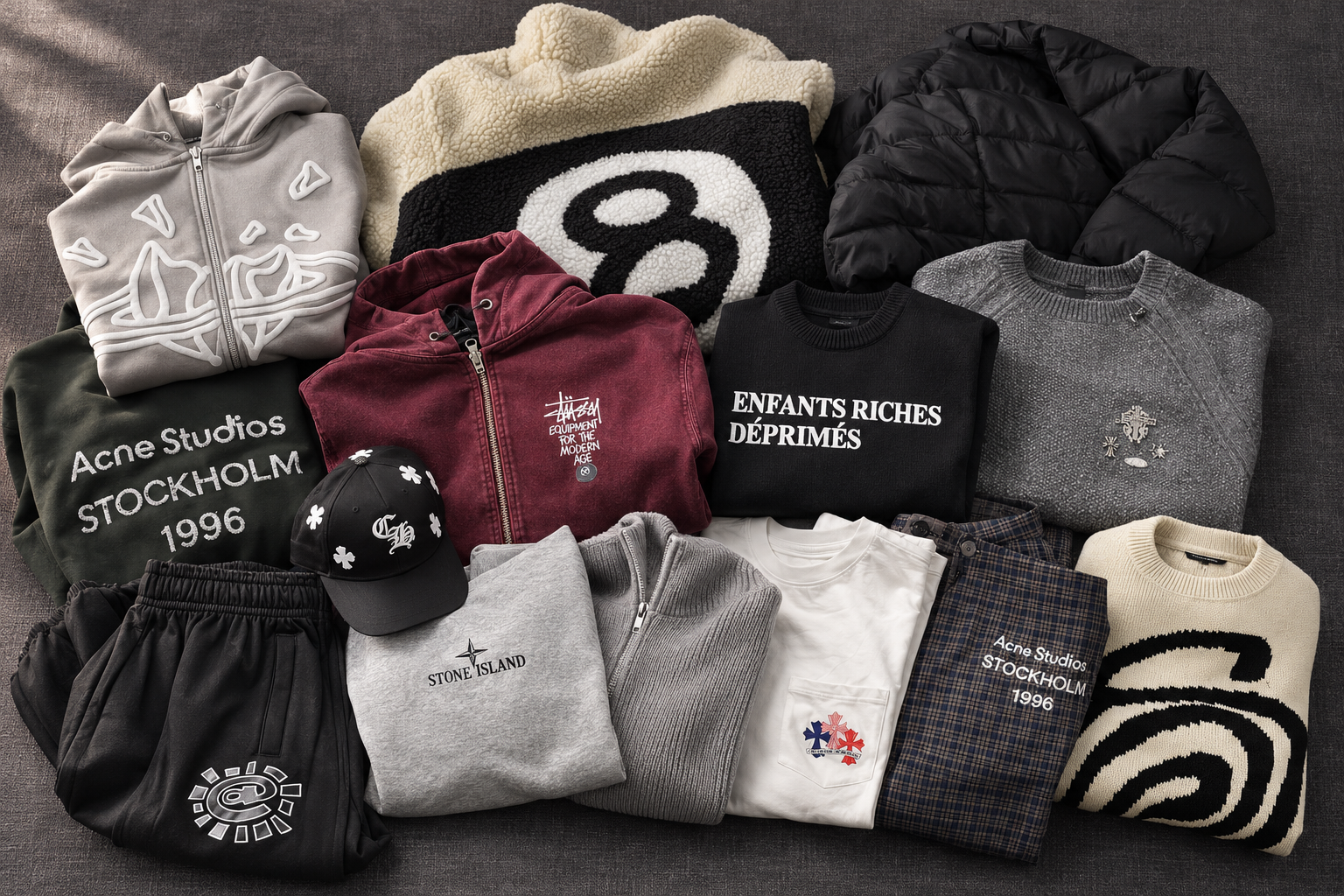
Overall Color Palette
This fall/winter clothing set is dominated by black, gray, white, and off-white, with a burgundy hooded jacket serving as the primary contrasting color. Dark outerwear, hoodies, and pants anchor the overall visual, while light gray knitwear, a white long-sleeve top, and an off-white knit sweater keep the layers from feeling heavy. If you want to organize a cohesive streetwear wardrobe, start with black and gray as a base, then add a burgundy or off-white piece to adjust the brightness.

Outfit Combinations Worth Extracting from the Image
The first combination can revolve around the black quilted jacket, gray turtleneck sweater, and plaid pants. The black outer layer helps define the silhouette, the gray knit provides a soft transition, and the plaid pants add detail. When paired with a black baseball cap, the overall look leans more casual; swapping for a simple belt or reducing patterned accessories will make the visual cleaner.
The second combination works well with the burgundy hooded jacket, light gray graphic crewneck, and black pants. The burgundy already has a strong presence, so the inner layers should be gray, white, or black, avoiding too many highly saturated colors. The black cap in the image can continue the dark tones and make the burgundy piece the clear visual center.
The third combination can use the off-white knit sweater with black graphic, white long-sleeve top, and dark bottoms. Off-white and white create a similar-toned layering, while the black graphic adds contrast. If adding a gray cardigan, it's best to leave a bit of white hem or collar visible to keep clear separation between layers.
Organizing Clothing by Layer
From a layout perspective, this image already includes outer layers, mid layers, inner layers, pants, and accessories, suitable for reorganizing by wearing order:
- Outer layers: black quilted jacket, gray graphic hooded jacket, and burgundy hooded jacket.
- Mid layers: black graphic hoodie, black lettering knit sweater, gray cardigan, and gray turtleneck sweater.
- Inner layers: white long-sleeve top and light gray graphic crewneck.
- Bottoms: black athletic shorts, black long pants, and plaid pants.
- Accessories: black baseball cap, black and white furry bag, and belt.
When styling, it's best to limit to three main colors, such as black, gray, and burgundy, or black, off-white, and white. When there are many patterns, keep other pieces solid; if already using a lettered graphic top, there's no need to add multiple eye-catching patterned accessories.
Visual Effect Created by the Layout
In the flatlay, dark pieces are concentrated around the edges and bottom, light knitwear and white top are distributed in the middle, and the burgundy jacket is positioned at the center of the frame, so the eye naturally lands on the jacket first and then moves outward. Small items like the furry bag, baseball cap, and belt fill the gaps between garments and add a lived-in, layered feel to the overall layout.
To recreate this layout, start by spreading out the larger outerwear and pants, then place the knitwear, hoodies, and inner layers, and finally use the hat, bag, and belt to balance empty areas. Garments with text or graphics should have their main prints visible, avoiding being completely covered by other items. Avoid piling all similarly colored clothes together; use black or white pieces to separate them for clearer boundaries.
What to Keep in Mind When Selecting Items
The image helps judge color relationships, pattern distribution, style coverage, and layout effect, but a flatlay alone cannot determine the cut, fabric composition, thickness, inner construction, actual size, comfort, durability, or brand authenticity of each garment. Some clothes have natural wrinkles, and the background and lighting may affect how colors appear. If you plan to organize outfits based on this, the safest approach is to first establish the main colors and layering, then adjust combinations based on the specific measurements and specifications of individual pieces.