 Elena Papadakis
Editor-in-Chief
Gray and Black Hoodies: Color and Styling Details
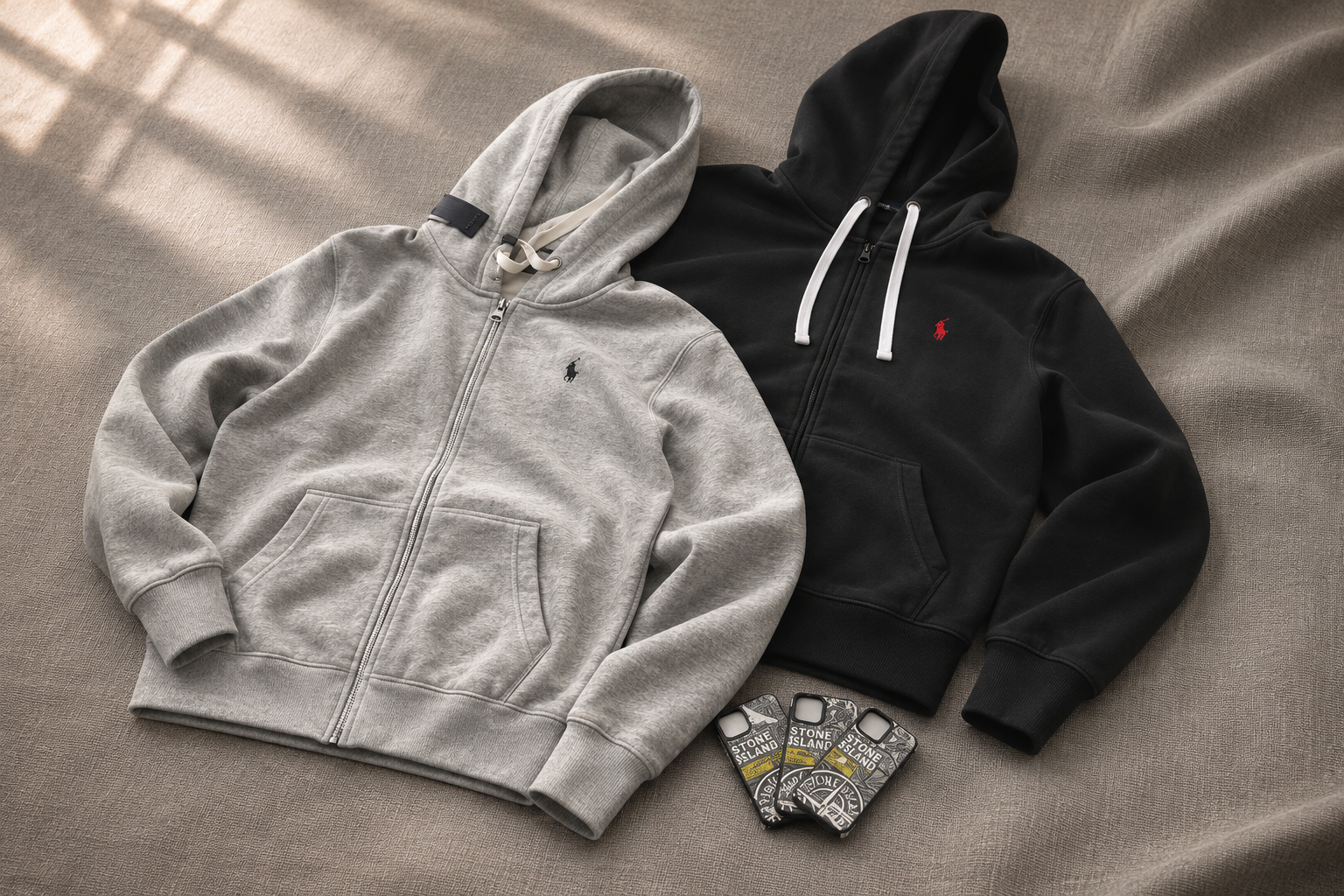
Placing light gray and black in the same frame lets you directly see the difference in visual weight and styling direction between two zip-up hoodies. The light gray version is softer and brighter, while the black one is more grounded and streamlined. By adjusting the flat-lay position, detail orientation, and accessory spacing, you can also create a display setup suitable for everyday outfit reference. 
Placing light gray and black in the same frame lets you directly see the difference in visual weight and styling direction between two zip-up hoodies. The light gray version is softer and brighter, while the black one is more grounded and streamlined. By adjusting the flat-lay position, detail orientation, and accessory spacing, you can also create a display setup suitable for everyday outfit reference.
First, Look at the Visual Differences Between the Two Main Colors
The light gray zip-up hoodie on the left has an overall soft tone, making the hood, cuffs, and hem details easy to identify. Light gray works well with white, beige, light blue, or medium gray, keeping the overall look airy. With dark bottoms, it creates a clear light-dark contrast; with light pants, it leans toward a clean, casual monochromatic effect.
The black zip-up hoodie on the right carries more visual weight. The light drawstrings and zipper trim create contrast, and the small equestrian-style graphic on the chest becomes a local focal point. Black pairs better with white, gray, denim blue, or olive bottoms, and you can use a light inner layer to break up the heaviness of the upper body.
Choose Styling Direction Based on Details
The light gray hoodie clearly shows a drawstring hood, front zipper, and large kangaroo pocket, with ribbed cuffs and hem. When styling, you can keep these casual elements and choose straight-leg jeans, relaxed sweatpants, or simple white sneakers. For more depth, add a white or light crew-neck top underneath so that when the zipper is open, it creates a bright inner layer.
The black hoodie also has a hood, front zipper, and front pocket, but the light drawstrings introduce a more striking line on the upper body. You can build the outfit around these light details, such as a gray inner layer, light-colored shoes, or accessories with subtle white elements. To keep it simple, reduce other bright accents and focus on the drawstrings, zipper, and chest graphic.
How to Compare More Easily in a Flat-Lay
The two hoodies are placed side by side with their bodies oriented in the same direction, making it convenient to compare color, hood shape, zipper, and pocket placement. The light gray hoodie sits in front and the black one behind, creating a layered depth and preventing the two colors from blocking each other. You can follow these tips when arranging:
- First, let the shoulders, body, and sleeves of both hoodies unfold naturally, then adjust the cuffs and hem to keep the structure from being hidden by wrinkles.
- Point the zipper, drawstrings, and chest graphic toward the camera to preserve design details.
- Place dark items toward the back or edge of the frame and light items in front to help establish tonal depth.
- Group accessories in the empty space below the clothing to add content without obscuring the main garment structure.
- You don't need to pull every edge perfectly symmetrical; keeping some natural wrinkles makes the shot feel more like an everyday styled arrangement.
Use Accessories to Balance the Composition
The dark accessories at the bottom have light and yellow details, adding a small amount of warm color to the overall gray and black palette. They are not placed in the center of the hoodies but grouped in the empty space below, so they complete the composition while avoiding distraction from the hood, zipper, and pockets.
If using them for a styling display, choose accessory colors from existing details on the hoodies. The light gray hoodie pairs well with black, white, or silver-gray small items; the black hoodie can incorporate gray, beige, or a touch of yellow. Keep the number of accessories low, as too many will weaken the hierarchy between the two hoodies.
Simple Judgments When Choosing Colors
If you prefer a soft, bright, and easily layerable look, lean toward the light gray hoodie's styling approach. If you prefer a low-key, high-contrast visual, build around the black hoodie with gray or light details. When both hoodies appear together, use the light gray as the brightening accent and the black as the stabilizing anchor, then complete the balance with a few light or warm accessories.
The image directly shows color, structure, detail placement, and display relationship, but you cannot judge fabric content, actual thickness, wearing comfort, size accuracy, durability, or authenticity from photos alone. To plan further outfits, refer to the specific product specs and intended wearing occasions before deciding on the proportions of inner layers, bottoms, and accessories.