 Elena Papadakis
Editor-in-Chief
Sp5der Gray Web Sweatpants Fit Guide & Size Conflict Fix
The most important thing to confirm about these Sp5der OG Web gray spiderweb sweatpants right now isn't the print intensity, but the size range and actual inseam. The product page has conflicting size information: the size row says S–XXL, while the specs section lists up to 3XL; the page also doesn't provide numeric measurements. Therefore, without flat measurements, ordering by letter size alone won't reliably tell you if the waist, rise, and inseam will
Updated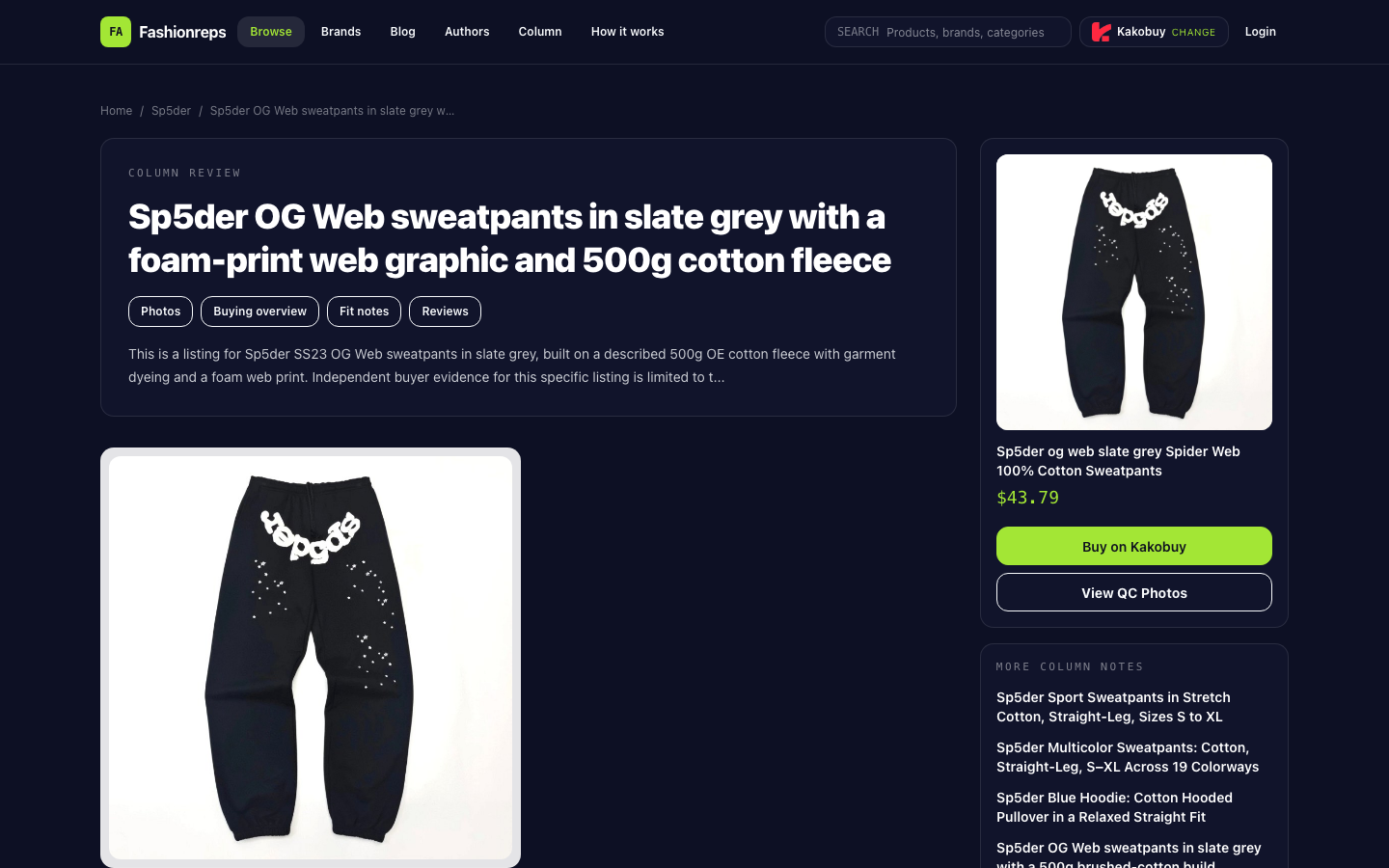
The most important thing to confirm about these Sp5der OG Web gray spiderweb sweatpants right now isn't the print intensity, but the size range and actual inseam. The product page has conflicting size information: the size row says S–XXL, while the specs section lists up to 3XL; the page also doesn't provide numeric measurements. Therefore, without flat measurements, ordering by letter size alone won't reliably tell you if the waist, rise, and inseam will fit.
First, Confirm What the Page Actually Provides
The product page describes these pants as gray OG Web sweatpants, and the catalog info mentions 500g, 21-count OE cotton fleece, garment dyeing, and a foamy spiderweb print. These are descriptions from the page or sourcing materials and cannot replace actual measurements for a specific size.
The most relevant evidence for fit assessment includes three points:
- The size row says S–XXL.
- Another spec section lists S–3XL.
- The page doesn't provide numeric waist, hip, front rise, back rise, or inseam measurements.
Therefore, whether 3XL is actually available, how sizes increment, and whether the legs are relaxed or regular fit cannot be confirmed from the current page alone.

Image: Screenshot of product page fit and purchase information; cannot replace actual measurements or warehouse QC photos of the target size.
How to Judge the Fit of These Pants
Without numeric sizes, don't imagine the silhouette based on the model, and don't automatically assume "sweatpants" means relaxed fit. Break fit assessment into three dimensions:
- Is there enough room at the waist? Focus on asking for flat waist measurement, and confirm whether the seller measures naturally flat and includes elastic stretch.
- Does the rise suit your wear style? Ask for front and back rise, especially if you prefer high-rise, mid-rise, or low-rise.
- Do the legs and cuffs meet your expectations? Ask for thigh, leg opening, and inseam to determine if they are straight, tapered, or relaxed stacking.
If you have well-fitting sweatpants, lay them flat and measure waist, front rise, hip, thigh, and inseam, then compare with seller's data. Comparing using the same measurement method is more meaningful than just looking at S, M, L, or XL.
What to Ask the Seller Before Ordering
Consolidate questions into one clear size confirmation message, avoiding vague questions like "Do these run big or small?" At minimum, confirm:
- Whether the current available sizes actually include 3XL.
- Flat waist and stretched waist measurements for the target size.
- Front rise, back rise, hip, thigh, and inseam.
- What the typical measurement tolerance might be.
- Whether the target size is for the same color and style, not data from other variants.
- Whether they can provide QC photos of the waistband, leg opening, tags, and full flat lay for the target size after arriving at the warehouse.
If the seller just says "true to size" or sends the letter size chart again without numeric measurements, the size conflict isn't resolved.
Tags and Print Only as Supplementary Checks
The page mentions foam or dimensional spiderweb print, but community discussions show that the foam effect can vary across products, and print height alone doesn't prove authenticity or quality. When judging the target item, you can request photos of tags, wash labels, print edges, and stitching, but these photos should correspond to the specific size and variant you're buying.
That means you can't infer correct fit just because the spiderweb print looks dimensional; likewise, you can't declare the item defective just because the foam effect is weak. Fit issues must be resolved with size data, while tags and detail photos are for supplementary verification.
Should You Hold Off on Ordering?
Pause ordering if the following information isn't complete:
- You need 3XL, but the seller can't confirm if 3XL is actually in stock.
- You're choosing between S–XXL, but can't get numeric measurements for the target size.
- You have specific requirements for length, rise, or looseness.
- The seller's measurements are from other colors, other styles, or an unverified size chart.
- You only have product display images and can't get tag and full QC photos for the target variant.
If the seller confirms the actual size range and provides flat waist, rise, and inseam for the target size, then compare those numbers with your existing well-fitting sweatpants to have enough basis to decide. Current evidence shows size field conflicts on the page, but cannot prove that a particular letter size will fit or confirm the exact silhouette.
Overall judgment: You can keep asking about these gray spiderweb sweatpants, but it's not suitable to order directly without numeric measurements. First resolve the S–XXL vs S–3XL conflict, then confirm waist, rise, and inseam for the target size—that's the necessary step to reduce fit risk.